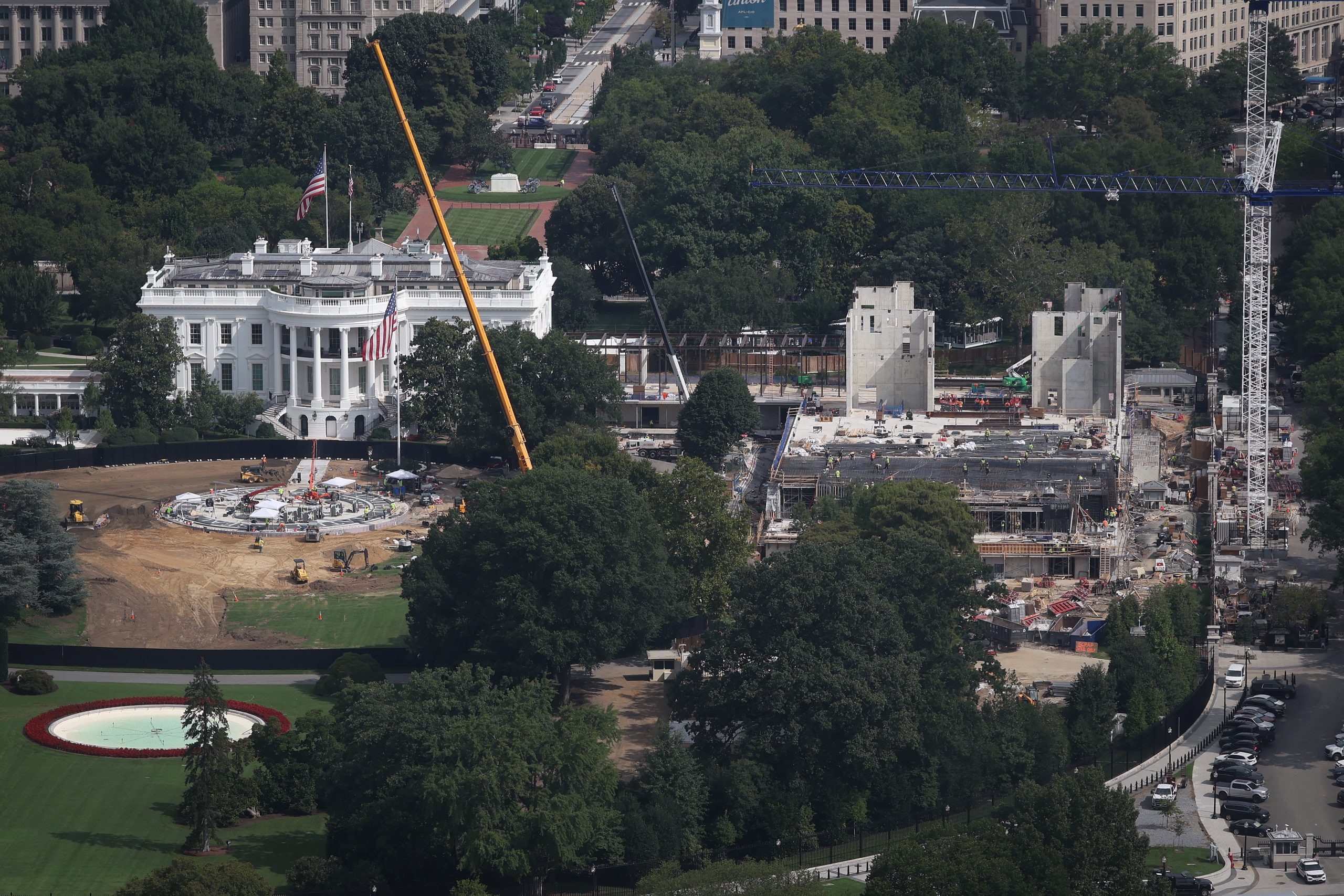
The Supreme Court on Friday gave President Donald Trump a temporary green light to keep building his contentious White House ballroom, halting a lower court order that would have stopped work while a legal challenge moves forward.
Chief Justice John Roberts issued an order that stayed a federal district court judge’s injunction. That injunction would have barred Trump from continuing construction while a lawsuit over the project plays out. Roberts’ order arrived on the same day the injunction was scheduled to take effect.
The order is an administrative stay, a temporary measure that could be lifted by the full Supreme Court. It does not resolve the underlying legal dispute.
Trump, in a post on Truth Social, welcomed the decision. “We are grateful for the Decision of the United States Supreme Court,” he wrote. “The Military/Ballroom Complex being built on the hallowed grounds of the White House, which is so vital for National Security, will be THE GREATEST OF ITS KIND!”
Senate Minority Leader Chuck Schumer, a New York Democrat, condemned the court’s action in a post on X. “The MAGA Supreme Court is rubber stamping Trump’s vanity-driven, gilded corruption,” Schumer wrote. “As costs skyrocket, the administration is wasting money on an endless and illegal war, corporate giveaways, and Trump’s pet projects.” Schumer added, “Democrats are laser focused on the issues that Americans care about.” He also said, “We will continue to fight this flagrant waste of taxpayer money relentlessly in the courts.”
The ballroom project dates to 2025, when Trump had the White House’s East Wing demolished without notifying Congress. The planned 90,000 square foot ballroom is projected to cost $400 million or more.
The National Trust for Historic Preservation is suing Trump to block the project, arguing that Trump did not obtain the required authorization or reviews before proceeding.
For now, construction can continue. But the administrative stay is only a pause, and the Supreme Court could change course. The lawsuit, meanwhile, remains pending in the lower courts.