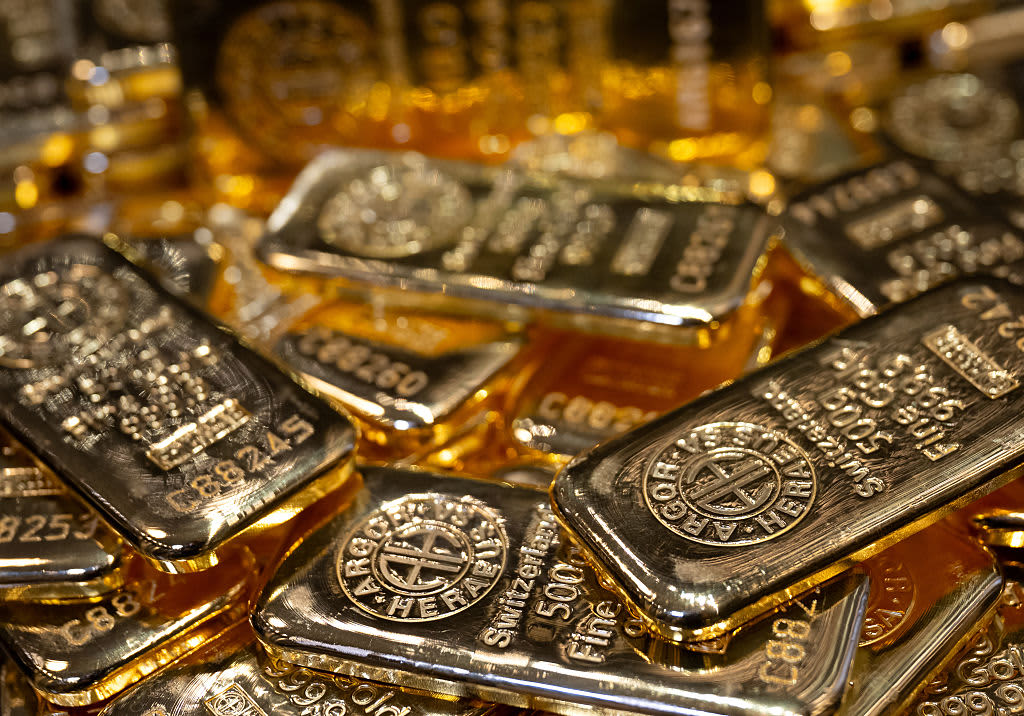
Gold prices climbed on Friday, putting bullion on course for a weekly advance of nearly 5 percent, as renewed concerns about U.S. debt, a softer dollar and jittery bond markets drew investors back to the metal.
Gold futures rose 1.67 percent to $4,647.70 in early trading, while spot gold gained 1.55 percent to $4,588.08. Over the five-day period, bullion is up 4.7 percent, with futures moving toward a three-month high.
The rebound marks a sharp turnaround from earlier this year, when gold hit record highs of almost $5,600. In the three months through June, the metal suffered its worst quarterly performance since 2013.
Giovanni Staunovo, commodity analyst at UBS, said rising global debt levels and sustained dollar weakness powered gold’s surge last year, and those factors are reasserting themselves. “That should lift the price of gold to $5,400 per ounce over the next 12 months, in our view,” he told CNBC via email.
The Treasury Department said Wednesday it would at least double the size of liquidity-support buybacks for government debt with maturities of 10 to 30 years, in an effort to stabilize a selloff in longer-dated Treasurys. The announcement initially pushed Treasury yields lower and weakened the dollar, sending gold prices higher. It came just as U.S. government debt topped $40 trillion for the first time ever.
Diane Garrett, executive chairman and CEO of Hycroft Mining, said markets appear to be reading the moves as a signal that the cost and duration of the debt load will now be a key factor shaping policy. “That’s exactly the kind of structural, long-term driver gold investors are underwriting,” she said. “It also tracks with why central banks keep rotating reserves out of Treasuries and into gold.” She added, “While this does add a degree of volatility, we think it’s supportive of the underlying demand trends for precious metals.”
The World Gold Council’s annual Central Bank Gold Reserves Survey, published in June, found that 89 percent of respondents expect global central bank gold reserves to increase over the next year. A record 45 percent expect their own institutions’ holdings to rise, while 1 percent expect them to decline.
Theo Botoulas, CEO of Neo Energy Metals, a South Africa-focused gold and uranium developer, said short-term moves such as Treasury Secretary Scott Bessent’s announcement will continue to drive volatility in gold, along with Middle East tensions. “However, the structural picture hasn’t changed,” he said. “Annual gold consumption is running at record levels of almost 5,000 metric tons per annum. At the same time, supply increases by little more than 1.5 percent annually, providing a favorable backdrop for the market.”
Still, analysts noted headwinds. Staunovo flagged higher oil prices caused by the ongoing Middle East conflict as a potential pressure point. “More expensive energy could add to inflation pressures and keep central banks more cautious about lowering interest rates, potentially supporting bond yields and weighing on the non-yielding metal,” he said.
Rhona O’Connell, head of market analysis for EMEA and Asia at StoneX, said upward pressure on yields is expected to return given the strength of the U.S. economy. “On balance, gold has to weigh up the headwinds of high, and likely continued rising, Treasury yields against the tailwinds of a weaker dollar, and don’t forget the Gulf. Much of this is already priced in and gold may now need yet another breather.”
David Morrison, senior market analyst at Trade Nation, said the latest rebound could leave gold vulnerable to a near-term pullback. “While this move in gold is impressive, especially given its 10 percent rally off multi-month lows since the end of last month, it may be a case of too far, too quickly. Prices may have to back up and fill in now for gold to make further gains,” he said. “But even if gold were to drop back to $4,400, if it could find support there, that would be a positive sign for the bulls. Even more so should the U.S. dollar continue to decline.”
For now, the combination of debt concerns, dollar weakness and strong central bank demand appears to be supporting gold, even as analysts caution that near-term volatility could persist. The metal’s fate may hinge on whether Treasury yields resume their climb and whether the dollar keeps softening.