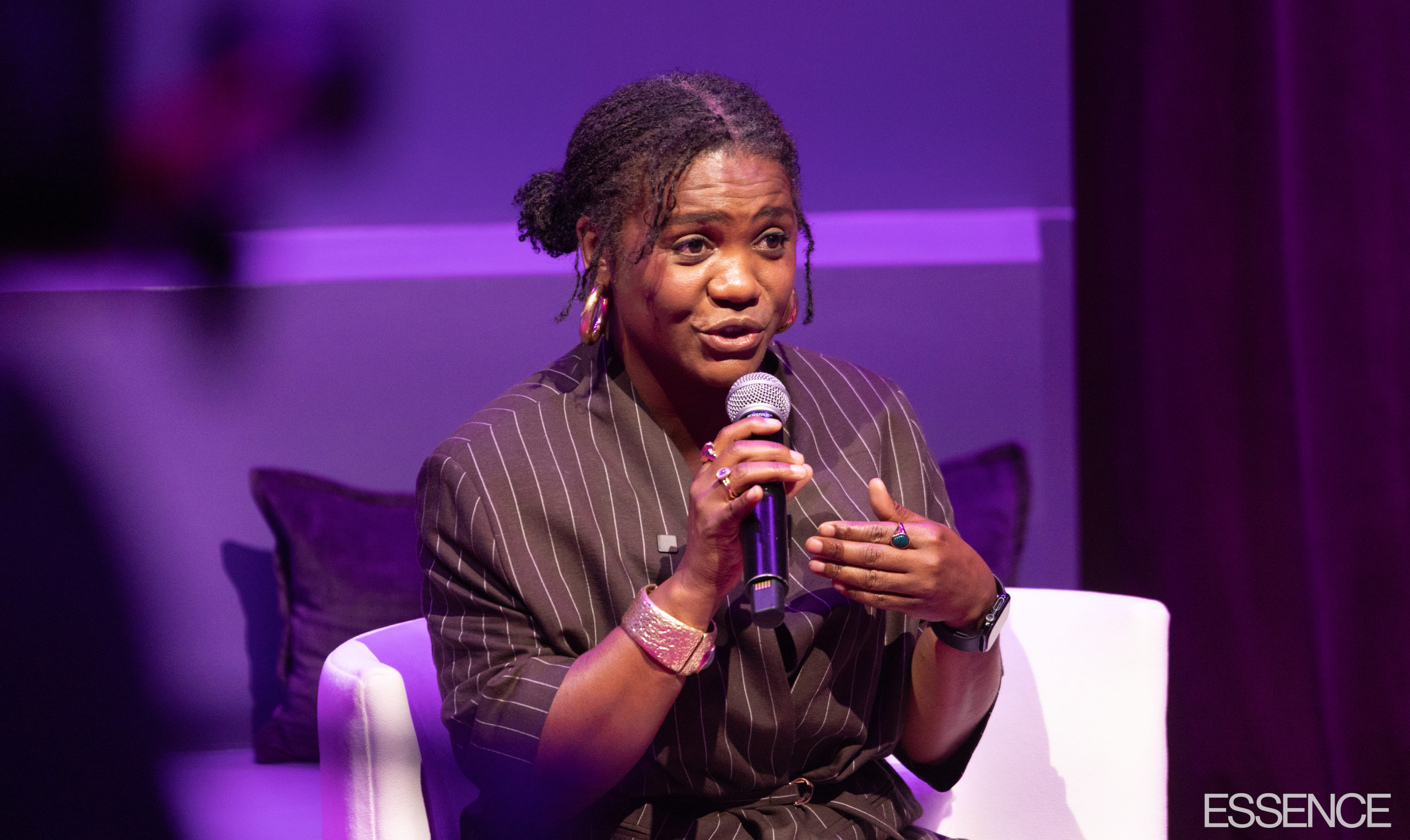
After surviving three heart attacks, Tara Robinson knows firsthand what can happen when a person’s symptoms are dismissed. Now she and her husband, Frederick, are on a mission to make sure people in underserved communities understand their heart health and know how to advocate for the care they deserve.
On the morning of April 10, 2014, Robinson woke up feeling that something was wrong. Her left arm was numb, her neck bothered her, and her chest felt like she had swallowed a pill without enough water. She was also sick to her stomach. At the emergency room, she was told she was too thin, that nothing showed up on her EKG or in her blood work, and that she should follow up with her primary care physician.
She was released and went to work, only for the same symptoms to return in front of her students. Back at the ER, she was told insurance would not cover what she claimed she was having because tests still showed nothing. After going back and forth with a white female cardiologist who eventually kept her overnight, she was released at 11:00, returned at 12:00, and suffered a massive heart attack before going into cardiac arrest.
A nurse from New Orleans stayed by her side, and Robinson says God saved her life. “I died on that operating table and went to heaven. And it was in my ICU bed that I knew this fight belonged to me. That’s where my journey started. But I don’t want our people to have to imagine these things, and that’s why [my husband and I] started the Black Heart Association.”
The Robinsons founded the Black Heart Association in 2016 after the heart attack that nearly took her life. Recognizing that the Black community faces a 54 percent higher risk of dying from cardiovascular disease, they made it their life’s work to help people understand the causes, effects, and symptoms of heart disease and take preventive action. The organization has traveled to more than 50 cities, served 300 different communities, and provided more than 20,000 screenings.
For four years, BHA has brought its mission to the ESSENCE Festival of Culture in New Orleans, offering free heart health screenings that include A1C testing, kidney function checks, and a complete cholesterol panel. Frederick recalls the first year: “Since we started serving at ESSENCE Fest, I remember year one, we served right on the street outside of the Le Meridien Hotel. We had our mobile unit with myself, my wife [Tara], and maybe two other team members. We were super small then.”
At the 2026 festival, BHA expanded its presence inside the Ernest N. Morial Convention Center, in the community hub next to the Coca-Cola stage. The activation, sponsored by Amgen, was called “Drop the Beat, Not Your Health” and gave attendees headphones to listen to music while waiting for screenings. “Having the expanded space was really, really, really beneficial,” Frederick said. “Anytime you have more space, you can be more creative with what you come up with in terms of how to engage the community.”
Frederick explained the thinking behind the interactive setup: “The idea is that they can be entertained while also waiting to learn more about their health. That’s always good for us because we never want to lose people. That’s the beauty of ESSENCE Fest…there’s so many people, and they want to take advantage of all of the free services. But when you’re providing a service that’s so important, as a provider, it kind of makes your anxiety go up a little bit because you’re so afraid somebody’s going to become impatient, or they’re going to walk away and not come back around. And, who knows…that could be that one person that you really, really needed to have that conversation with that you missed out on just because you weren’t able to hold them there, or because there were so many other things that were pulling at them that they walked away.”
The approach paid off: BHA screened more than 700 attendees over the festival weekend, while educating and informing double that number.
Frederick credits BHA’s community engagement to its collaboration with local phlebotomists, labs, universities, and public health organizations. At the festival, four screeners who interacted with attendees every day were all from New Orleans. “You never want to pull up into somebody’s backyard and set up and start cooking…that’s how we look at it,” he said. “Our team [from Texas] is here with us, but we always try to partner with people who are in the city, who know the people…because we understand how big trust is with our community, especially when it comes to healthcare. If I know you, and I trust you, then I’m more likely to have a conversation with you, and I’m more likely to engage with you. Those are the things that we want to always make sure we are keeping at the forefront of how we serve. If they need me for support, great, but I get out of the way and just let love lead, and we never go wrong.”
Even after the screenings, BHA remains engaged, talking people through the process and making sure they are not left in the dark. “One thing we make sure we do is stay engaged and stay locked in. People just want to know that you are listening and that you’re acknowledging what they’re saying,” Frederick said. “We like to communicate and talk them through the process so that they’re not in the dark.”
Tara encourages people to expect the same level of service from their doctors that they would from restaurants or hotels. “Get to searching for somebody else because there are doctors out here that care about us, and you deserve to be heard. Anything else is unacceptable.” She also stresses the importance of knowing your body and being assertive when seeking care. “When I say that someone dies [from cardiovascular disease] every 36 seconds, I don’t want that to be you,” she said. “They tell us not to be bold or not to, you know, raise our voices because that’s one of the ways that they kind of suppress us…but I say raise your voice, and then know the chain of command within the hospital. We teach our Black kids how to deal with being pulled over by the police. We have to know the exact same steps when we’re going to the healthcare system. So when you go in there, already know what you’re asking for, and be demanding. You know your body better than anyone. And a lot of it is sometimes just getting to a heart specialist. Sometimes you can’t get past your primary care physician about it, so you have to insist on speaking to the person that knows the heart better than anyone.”
For the Robinsons, ESSENCE Fest is just one stop in a year round mission. They want to be a permanent resource in New Orleans and beyond. “Invite us to your cities. That’s why we exist…to come pull up in your city,” Tara said. “We will come to your family’s house. We want to do the house parties. We want to do your family reunions and all the things, and all of that is free.” Frederick added: “As long as there is an ESSENCE Fest, there’s going to be a BHA at ESSENCE Fest, but we understand that there’s a need all day, every day. We don’t just want to be a yearly vendor at ESSENCE Fest; we want to be a permanent presence in the city. We want to be a resource. We want to be a connector. We want to be a part of whatever people need in order to live out their best life because at the end of the day, all we got is each other, and we want people to be here. We want people to be well, and we want people to be happy and not just for themselves but everybody that they’re connected to because we are all at the end of the day, we’re one, and we’re better together.”