Americans are holding onto their cars longer than ever, with the average vehicle age now 12.8 years. Yet the industry’s shift toward software-defined vehicles has some experts wondering whether today’s new cars will last that long.
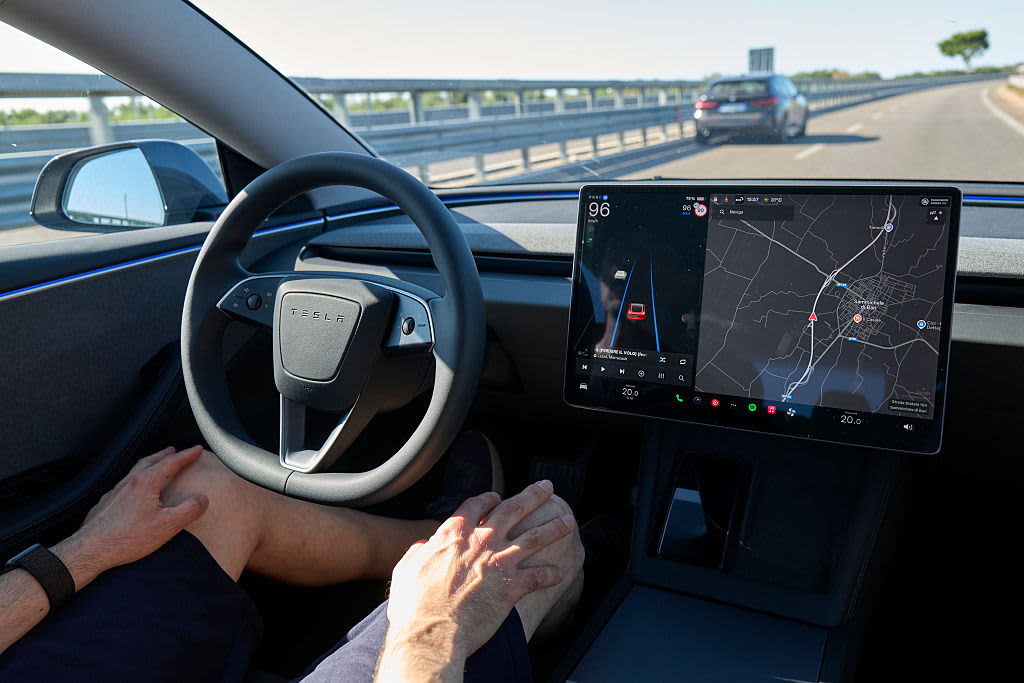
As cars become more like smartphones on wheels, the very definition of vehicle longevity is being questioned. Software-defined vehicles rely on powerful computers and internet connectivity to control functions once handled mechanically. They can receive over-the-air updates that add features or fix issues without a trip to the dealership.
“A software-defined vehicle is really a vehicle which is no longer stale in time. It’s a vehicle which continues to improve over time through over-the-air updates,” said Wassym Bensaid, Rivian’s chief software officer. “What we like to say at Rivian is that the least capable Rivian you will ever get from us is on the day of your purchase, and then it will keep improving and getting better and better over time.”
The average new car in the U.S. costs nearly $50,000, a far bigger investment than the latest smartphone. But as these high-tech vehicles age, certain features could become unavailable due to outdated hardware or discontinued support. And with automakers relying on increasingly proprietary technology, the repairability of a vehicle over time is uncertain.
“We honestly don’t know how long these vehicles will last,” said Sam Fiorani, senior vice president of vehicle forecasting for AutoForecastSolutions. “We’re already seeing problems with hardware not being able to deal with new software.”
It wouldn’t be the first time drivers have lost features they paid for. In 2022, AT&T became the first telecommunications company to shut down its 3G network, leaving millions of vehicles from various brands without access to emergency response services, some navigation, and infotainment options. Those cars remained drivable, just without the perks that came with them when they were purchased.
Tesla has also walked back earlier promises. The company said in 2016 that every vehicle it produced had the hardware needed for full self-driving, or FSD. CEO Elon Musk reiterated in 2019 that the then-new Hardware 3 computer would support the feature. But this April, Musk announced that Hardware 3 vehicles would need upgraded computers and cameras for “unsupervised” FSD. Tesla offered qualifying customers either a hardware upgrade or a discounted trade-in. Tesla did not respond to a request for comment.
Rivian’s Bensaid said the company designs its vehicles with what he calls “headroom” to handle roughly seven to ten years of software upgrades. He draws a distinction between new features and essential maintenance.
“There’s a distinction between feature updates, which is a new additional functionality that you may get post-launch and post-purchase of the car, and then safety updates or security updates,” he explained. “Our commitment to our owners is safety and security updates will be supported by Rivian indefinitely. Your vehicle will stay fully functional, fully safe, whatever the duration of the ownership is.”
Sam Abuelsamid, vice president of market research at Telemetry, expects that features will be updated for a few years, then support will taper off as software outgrows the hardware. He said automakers will likely still provide a basic level of support, particularly in the form of safety and security patches and bug fixes.
“From a product liability perspective and a safety perspective, they have an incentive to fix those problems as much as they possibly can,” he said.
Maintaining software is expensive, and hardware can wear out or become obsolete. The 3G shutdown in 2022 raised questions about whether affected cars lost resale value. Fiorani notes that a growing number of buyers are turning to the used market, and he worries about the long-term availability of affordable used vehicles.
Alex Yurchenko, vice president of data insights at J.D. Power, sees a more nuanced impact. He said software-defined vehicles are “unlikely to fundamentally change the used car market.” But he expects the market could split into two groups: vehicles that continue to receive over-the-air support and retain value better, and those that lose support. Manufacturer certified pre-owned programs could become more important as buyers seek reassurance.
“Valuation remains a challenge,” Yurchenko said. “There are no widely accepted standards for assessing software-enabled features, and buyers may have concerns about [advanced driver-assistance system] calibration, feature availability, data privacy, and the long-term availability of subscriptions or connected services.”
Beyond resale, car culture itself could be affected. Fiorani, a classic car enthusiast, wonders what will happen when today’s software-defined vehicles become collector items.
“Going further out, when those vehicles become classics, how are they going to be maintained and how are they going to support aftermarket care?” he asked.
Older vehicles already pose challenges like obscure parts and service manuals that are hard to find. Software-based cars add another layer of complexity, often requiring specialized skills, tools, and access to proprietary data.
Right to repair laws, which give consumers more freedom to fix their own devices, are spreading across the U.S. Bensaid said Rivian will soon give owners more access to the vehicle to comply with those regulations.
“One of the upcoming updates that we will have is actually to unblock what we call the service menu within the car and really allow our owners to perform more actions in line with the right to repair regulations,” he said. “But then we want to go even above and beyond that and really allow that possibility for owners within the car to perform a full diagnostic check using our AI assistant, using the on-screen menus, and then perform some of the basic repairs, and then guide them through some of the certified third parties that we recommend.”
Abuelsamid suggests that companies that stop supporting their products should be required to release the software to third parties that can maintain it. “If we go down that path, we really ingrain right to repair as something that everyone has access to then, yeah, I’m more optimistic than I used to be,” he said.
For now, the lifespan of a software-defined vehicle remains an open question. Automakers, buyers, and regulators are all grappling with what happens when hardware and software stop advancing together. The outcome will shape the used car market, the repair industry, and even car culture for years to come.