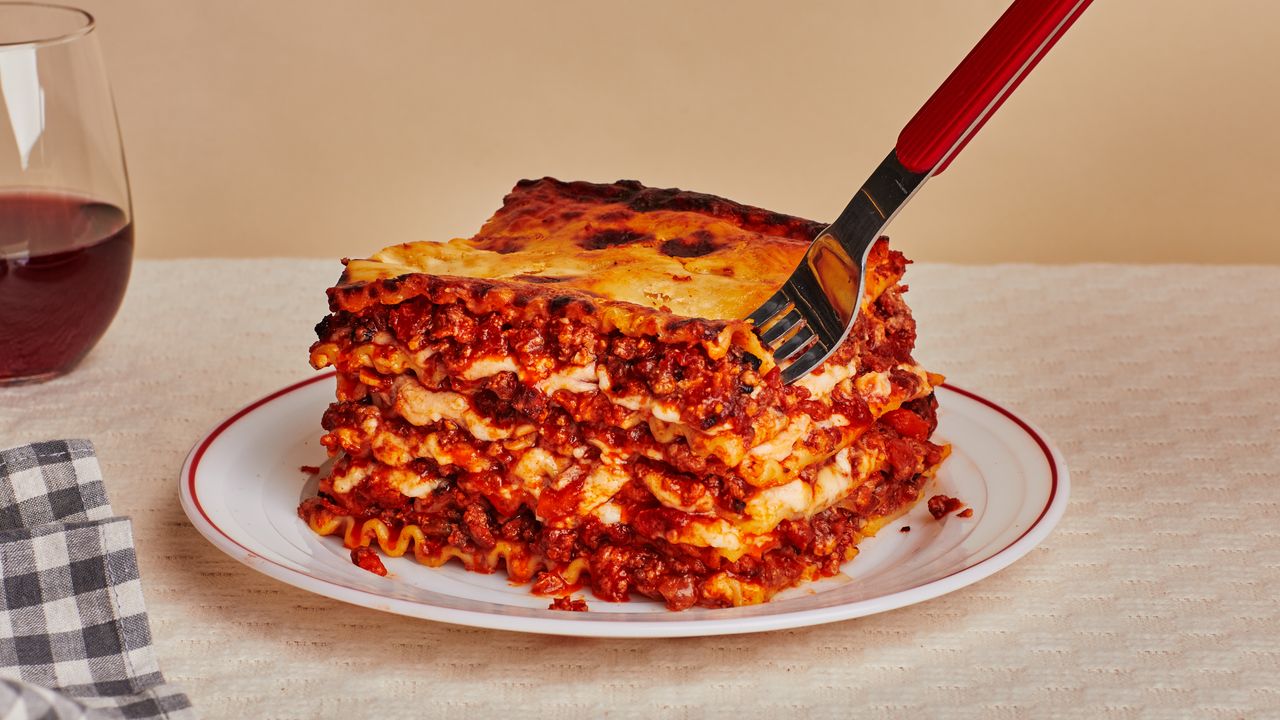
When I developed BA’s Best Lasagna back in 2017, the grocery bill was the last thing on my mind. This is a dish designed to be a centerpiece, a massive, celebratory tray that challenges your oven and your core strength. My recipe, like most versions, demands time and effort. But after a wave of reporting on inflation and food prices, I started scrutinizing the cost of the recipes we feature most. I was stunned to find that buying every ingredient for my lasagna would set you back about $125 in 2026.
That price tag is even more surprising given how straightforward the recipe is. It’s a slow simmered meat ragù, a Parmesan heavy béchamel, and layers of store-bought noodles. How does that add up to triple digits? Consider the shopping list: three pounds of meat, pancetta, wine, tomato paste, canned tomatoes, butter, milk, olive oil, and a serious amount of cheese. Alone, each ingredient seems reasonable. Together, they’re punishing.
So I took a hard look at what could go. White wine, tomato paste, pancetta, carrots, celery, butter, Parmesan, chicken broth, ground pork, nutmeg, and cayenne pepper all earned a spot in the original, but none of them justify their price in a budget friendly remake. Even inexpensive ingredients can cause trouble when you have to buy them in bulk. Carrots come by the pound, and a jar of nutmeg might only cost a few cents per pinch, but you’re still out $10 if you don’t already own it. Nobody has ever sent back a lasagna for lacking nutmeg.
Instead, I brought in a handful of cheap, accessible replacements: lentils, pepperoni, hot sauce, and cheddar cheese. Lentils stretched a single pound of ground beef into a hearty, substantial ragù, and they fit naturally into Italian cooking traditions. Pepperoni delivered a double hit of umami and a pop of heat. Even the least expensive cheddar provides enough sharpness and creamy texture to carry a béchamel. These swaps bring the total cost to less than half of the original, while keeping the dish festive enough for a crowd.
The techniques changed as well. I gave the ground beef the deepest sear I could, maximizing the flavor that a cheaper cut can offer. The original used butter to build the roux that thickens the béchamel. I swapped in olive oil, invoking the oil based roux of Cajun cooking. Since I already needed oil to sear the beef and grease the baking dish, that single bottle worked triple duty. The original also calls for two boxes of noodles to create six layers. One box was plenty. There might be an old law in some Emilia-Romagna hill town demanding six layers, but it doesn’t hold in New York City.
It’s easy to feel uneasy about straying from a meticulously tested recipe. But remember that no version of a dish is absolute. Even my own recipes are meant to be adapted. So why not give it a shot? You might end up with a lasagna that’s both cheaper and just as satisfying.