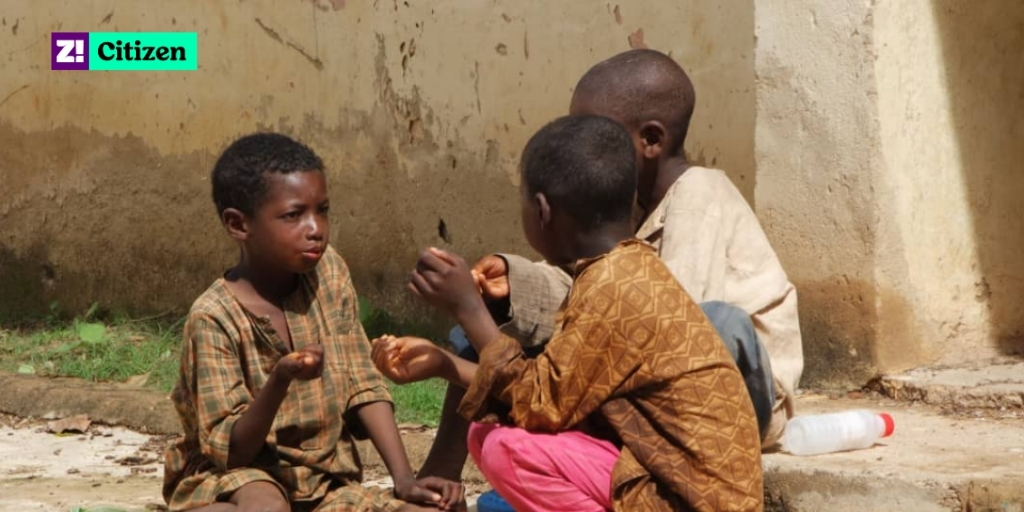
Across Nigerian cities and towns, the sight of Almajiri children roaming streets with bowls is a familiar one. For many, it has become the symbol of a broken education system. Now, President Bola Tinubu’s government has unveiled a new national policy aimed at regulating the Almajiri system and keeping these children off the streets. But with a history of failed attempts, the question is whether this plan will be different.
For years, Almajiri children have been among the most visible signs of Nigeria’s education crisis. They can be seen moving through communities, bowls in hand, asking strangers for food or money. Some are sent away from home to study the Qur’an, while others spend more time on the streets than in any classroom.
Everyone recognises the problem. Several administrations have tried to solve it, and President Bola Tinubu is the latest to take a shot. On Wednesday, August 5, 2026, the federal government, through the Ministry of Education, launched the National Policy on the Enhancement of Almajiri Education in Nigeria.
The policy promises to regulate learning centres, combine formal education with Qur’anic instruction, introduce vocational and life skills, improve welfare, and crucially, stop children from being sent out to beg. On paper, it sounds promising. But Nigeria has travelled this road before.
Between 2010 and 2015, former President Goodluck Jonathan’s administration built and equipped 157 Almajiri/Tsangaya Model Schools across the country, intending to blend Qur’anic education with conventional basic education. Years later, investigations revealed many of those schools were rotting away, poorly equipped, or simply abandoned.
Now, Tinubu’s administration is attempting another reform. The new policy does not seek to shut down the traditional Almajiri system. Instead, it introduces a framework to regulate it. Under the policy, Almajiri learning centres must register with the appropriate authorities and maintain records of the children in their care. Government agencies will also conduct monitoring and inspection visits.
The curriculum is set to change as well. Alongside Qur’anic and Islamic studies, children will receive literacy, numeracy, life skills, and other forms of basic education. The government is also establishing minimum standards for learning centres, covering requirements for learning rooms, sanitation, healthcare, and the separation of learning spaces for male and female students.
Centres that fail to meet these standards will be given a probation period to adjust before any sanctions are imposed. And there is a major rule that could change the face of Almajiri on Nigerian streets: learning centres must not send children out to beg. The government has warned that centres violating this provision could face sanctions, including closure.
Whether the new policy will avoid the fate of its predecessors remains to be seen. The government has promised regulation, enforcement, and better outcomes for Almajiri children, but the success of the plan will depend on implementation, funding, and the willingness of learning centres to comply. For now, the nation watches and waits.