On August 12, 2026, the moon’s shadow swept across northern Spain, delivering Europe’s first total solar eclipse since 1999. In Tarragona, an ancient Roman port city layered with two thousand years of history on the Mediterranean coast, thousands gathered along the waterfront to wait through a punishing late-summer heatwave for just over a minute of darkness.
Crowds descended from across Europe and beyond. International tourists flew into Spain for the celestial spectacle, while local residents squeezed onto packed, seemingly airless trains from Barcelona. On the pier, families and friends clustered beneath any shade they could find, playing games, lying in the sun, and finding creative ways to pass the long, hot hours. Children splashed in a fountain to escape the heat, and circles of people shared watermelon during the Sindriada, a local tradition of coping with August temperatures that is part of Tarragona’s Sant Magí festivities.
Eva, visiting from Strasbourg, cooled off with a slice of watermelon as temperatures climbed. Elpidio had traveled from Barcelona to witness his first total eclipse, setting up a special camera rig in the hopes of capturing the moment of totality. Meanwhile, a group of castellers raised a human tower, a beloved Catalan tradition, as the city buzzed with anticipation.
Boris came from Switzerland, bringing his telescope. He had attempted to see the 1999 eclipse in France, but clouds had obscured it. Twenty-six years later, he was determined to try again. Nearby, Diana, an architecture student from Romania on holiday with her family, sat sketching the historic buildings, adding a small eclipse in the corner of her drawing. She said the sketching helped make the long wait in the sun more bearable.
Willa, a traveler from Philadelphia, embroidered a bag that mapped her summer, with the eclipse stitched at its center as its most important moment. When the partial phase began, she started to dance. Around her, eclipse chasers baked in the heat, each finding their own way to pass the time. Family members of all ages gathered by the port, and the crowd swelled as the moment of totality approached.
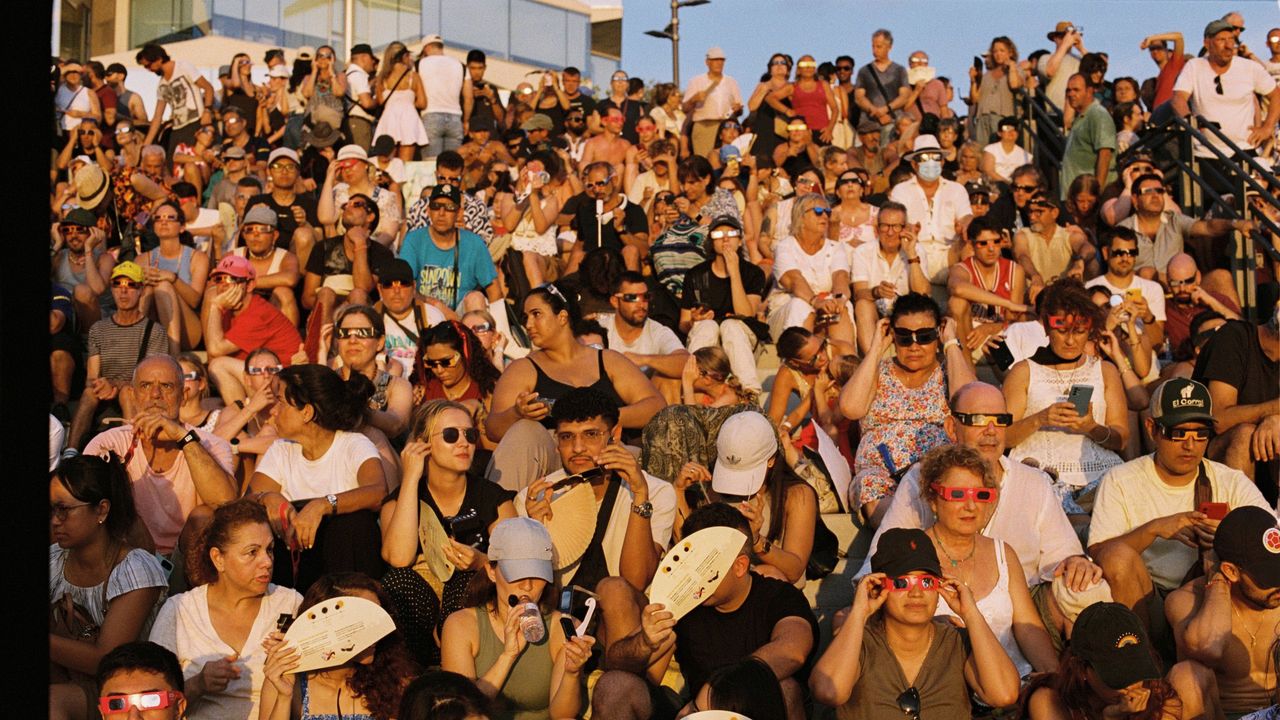
As the partial eclipse progressed, spectators climbed the stairs and raised their glasses to the sky. The reflection of the eclipsed sun sent sparkles dancing across the water. Then came a sea of eclipse glasses, everyone looking upward for the grand finale.
When totality finally arrived, the energy broke open. The crowd erupted, some cheering and others moved to tears, a collective wave of emotion rolling through the onlookers as the sky darkened. For a moment, the world was still and silent, save for a flock of birds flying low over the water. The long hours spent baking in the sun suddenly felt worth it.
After the moon moved on and light returned to Tarragona, the thousands who had gathered along the ancient port shared a singular memory. As one observer put it, who needs shade when you’re standing in the moon’s shadow? For those present, the brief plunge into darkness above the Mediterranean was a reminder of the universe’s power to unite strangers in awe.