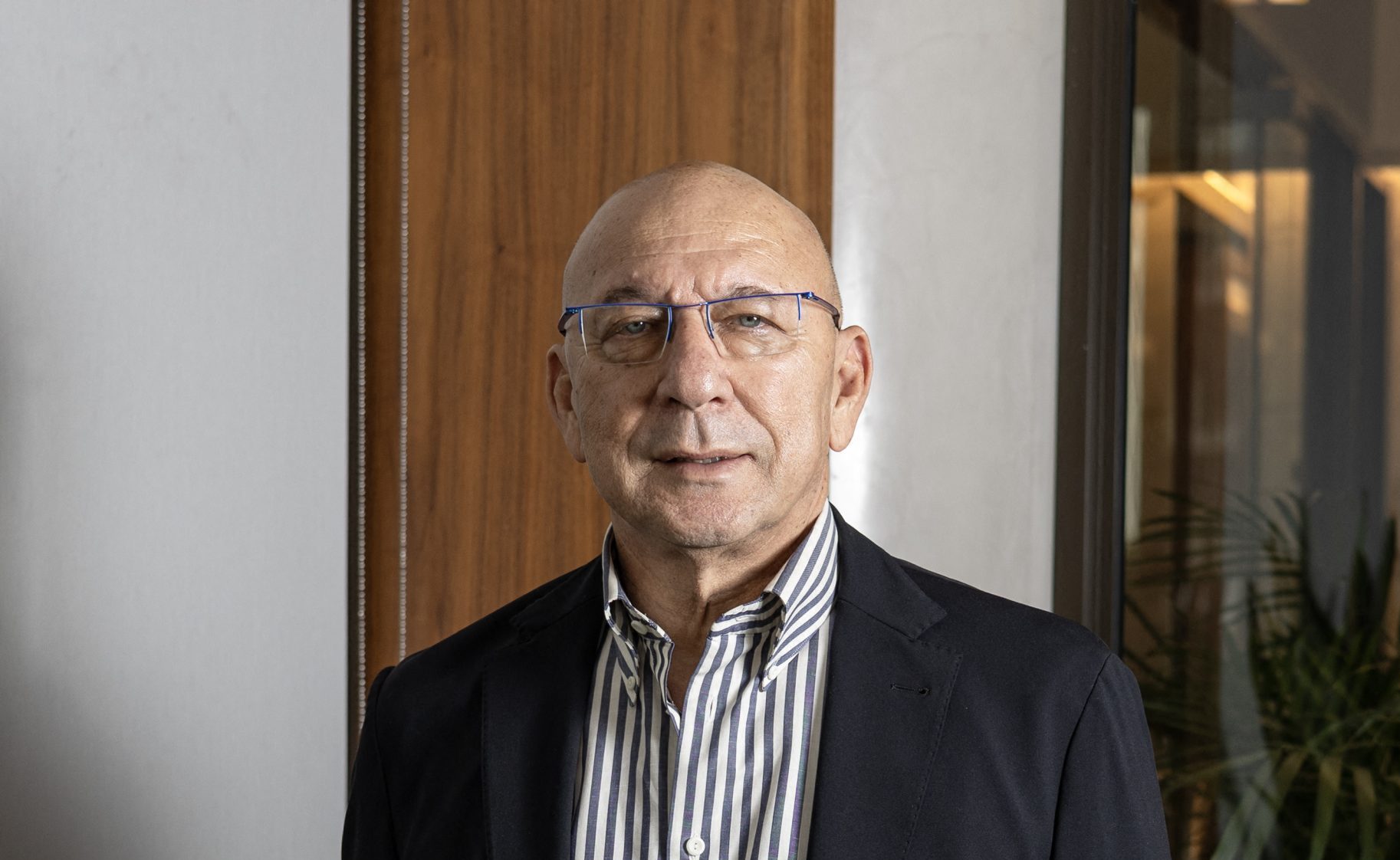
On a crisp Cape Town winter morning, Trevor Manuel sits in a deli along the Atlantic seaboard, sipping a cortado. The man who served as South Africa’s finance minister for 13 years still commands a certain reverence from the local business community, but he is not interested in basking in that legacy.
“The one thing I’ve learned is that you can’t be too precious,” Manuel says, looking back on the gruelling early years of his ministerial career. He built the Department of Trade and Industry from scratch under Nelson Mandela, navigated the brutal tariff adjustments of the 1994 Marrakech Agreement, and then took over the national purse strings.
“I had the view then, I still have it now, that when you are appointed into office in this country, you are very well looked after … but the idea is not to make you wealthy.”
When asked about the nostalgia that clings to him, Manuel smiles and recalls a lesson from Thabo Mbeki, who replaced Mandela as ANC president in 1997. “He said: ‘I don’t even like his shoes, he wore ugly shoes.’ I’m saying: ‘It’s not yours.’ You don’t own it. Push yourself, carry on.”
But carrying on has become increasingly difficult for South Africa, a country Manuel diagnoses as suffering from a profound case of “inertia”. He argues that the nation’s economic stagnation is the direct result of critical, self-inflicted wounds that occurred after the ANC’s pivotal 2007 Polokwane conference. He refers to “before Polokwane” as a distinct era of lost industrial opportunity.
“We had reached an agreement; Airbus was going to build a series of massive aircraft for defence airlift and South Africa contracted into it,” Manuel recalls, frustration still visible. “We had the opportunity to contribute a significant part of that plan, and we were keen on it because of the industrialisation that follows. Polokwane terminated that.”
He lists other casualties of that political transition: the stalling of the Pebble Bed Modular Reactor, delays in the hydrogen economy and the abandonment of the Joule, an early South African electric vehicle developed at the Council for Scientific and Industrial Research (CSIR). “All of those projects stalled because after Polokwane came …” He lets the sentence hang.
The 2007 Polokwane conference was the ANC’s 52nd National Conference, where Jacob Zuma beat Mbeki for the party presidency. “But I’m not there, so I can’t solve that problem. I can observe it.”
Even from the sidelines, Manuel’s analytical mind designs solutions. One of his most enduring concerns is the erosion of oversight and capability within South Africa’s legislative arms. Shortly before leaving government in 2014, he says he approached Zuma with a proposal to design a technical training syllabus for members of parliament, realising that many lacked the basic capacity to read department gazettes, analyse actual expenditure trends or monitor public cash flows. The offer was declined, with officials wanting to hand his hands-on experience over to highly paid corporate consultants.
“Consultants want to charge loads of money, don’t understand the value, don’t have the lived experience,” Manuel says. The technical training syllabus still sits with him, but his diagnosis of the democratic deficit remains razor-sharp.
He points to the failures of the proportional representation (PR) system, which has stripped politics of direct constituency accountability, and the total breakdown of local government governance where councillors bypass supply-chain rules for personal gain. “I think our democracy needs a lot of repair work,” Manuel says plainly. “What passes for debates in parliament is actually a complete sham. Consider the police committee; parliament needs to look at the fact that our police service has been completely decimated … but members of parliament have no idea. Some of them can’t switch on a computer. So, they go to the department and ask people … and that’s basically what happens.”
In a country obsessed with political lineage and connections, Manuel laughs off persistent rumours, such as the false claim spread by political opponents that former South African Revenue Service (SARS) Commissioner Edward Kieswetter is his cousin. “The EFF said he’s my cousin, and they lost in court,” Manuel laughs. “We are distinctly not cousins. I also studied at Pentech (now Cape Peninsula University of Technology) and went to Harold Cressy as he did, but we’re not cousins.”
“Knowledge is valuable when shared,” he says, before heading off to a schedule that looks more like a full-time executive career.
Having handed over the Old Mutual chairmanship on 5 June, Manuel is now turning his full attention to the continent. He is spearheading the work for an African Borrowers Club and conceptualising an Atlas of Economic Complexity to reform global debt and rebuild regional industrial trade.