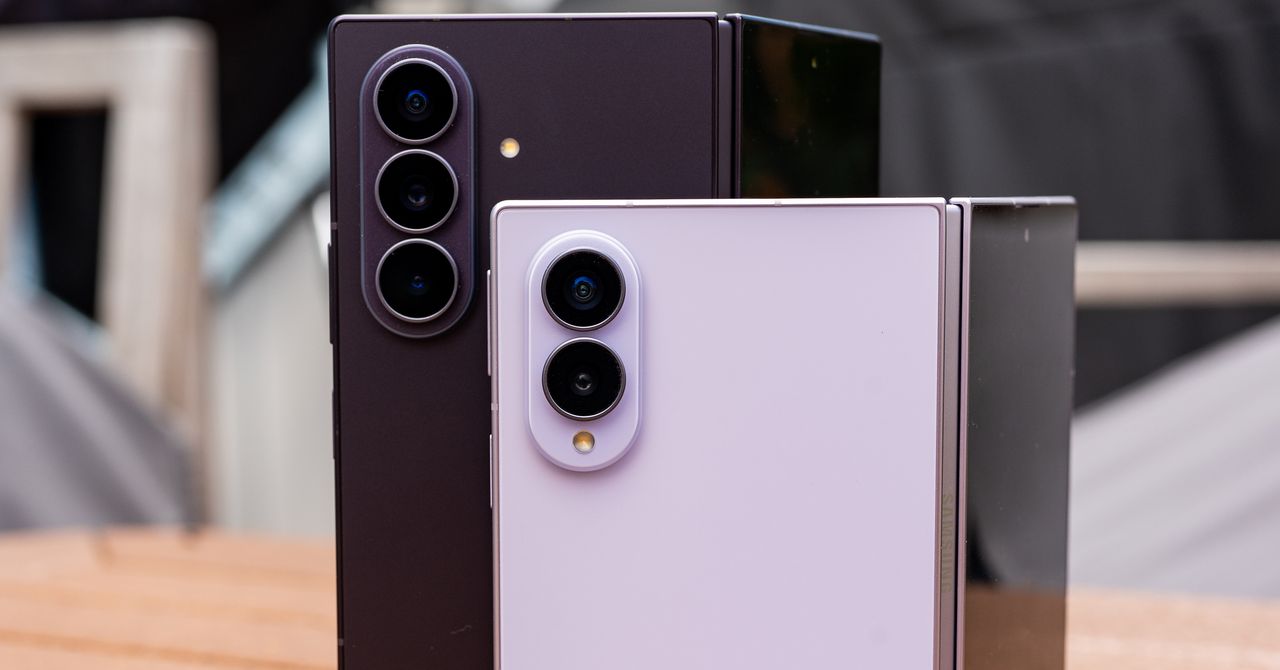
After nearly a decade of folding phones that mimic the traditional candy bar silhouette, Samsung has finally introduced a new form factor. The Galaxy Z Fold8 is shorter and wider than its predecessors, making it feel more like a tablet when opened. The Fold8 Ultra, however, sticks with the taller and slimmer design familiar to Samsung’s book style foldables. After weeks of testing both, one clear winner emerges.
For years, Samsung’s foldable phones have followed the shape of the standard smartphone: a tall, narrow slab. The Flip folds that slab in half for pocketability, while the Fold adds a second screen for a book like experience. But the new Galaxy Z Fold8 breaks away from that mold. It is shorter and wider than previous Folds, and when opened, it feels even more tablet like than its predecessors. The Galaxy Z Fold8 Ultra, in contrast, keeps the taller and slimmer proportions that long time Fold users will recognize.
I spent several weeks with both devices, and my hands consistently reached for the Fold8. That surprised me, especially since the Ultra has the better camera. The Ultra’s taller cover display makes it harder to reach the top of the screen without shifting your grip, and the Fold8’s hinge is easier to open. That ease matters because the Ultra’s narrow, tall screen feels so similar to a regular phone that the extra effort required to unfold it becomes a deterrent. I often forgot to open it, but with the Fold8, I found myself flipping it open constantly to use the 7.6 inch inner display in portrait or landscape. It is like switching Gmail from Compact view to Comfortable view; yes, you see fewer email threads at once, but Comfortable is the way to go, man.
The Fold8’s less rigid hinge means it cannot hold itself half open at as many angles as the Ultra. That did not bother me as much as expected. It still props open at a near 90 degree angle for tabletop viewing. The front 5.5 inch screen has a 10:16 aspect ratio, which produces less letterboxing than the Ultra’s display when watching videos. You still see chunky black bars on some apps, but they are not as pronounced.
Despite the Fold8’s shorter, wider outer screen, you do not lose much information compared to the Ultra. I compared messaging apps and websites in Chrome, and the extra text visible on the Ultra was marginal. The Fold8 feels lighter, easier to reach across, and much better for typing, though I will repeat my usual complaint that Samsung’s built in keyboard is poor and its voice typing is worse.
The crease on both phones is significantly less visible and feels smoother under your finger than on earlier models. My biggest design complaint with these Folds is the camera module jutting out from the back, causing the phone to rock when placed on a flat surface. A case doesn’t fix the problem either. Google solved this with a horizontal camera bar on its Pixels, and Apple appears to be doing the same.
In day to day use, the Fold8 is simply nicer. Split screen mode feels less cramped because the wider display provides more breathing room, and you can run three apps side by side comfortably.
There is a $200 price gap between these two expensive phones, but that difference stings less when you are already spending around two grand. The Fold8 costs $1,900, while the Ultra is $2,100. If you choose the cheaper model, you do sacrifice some specs, but not performance. Both devices run the Qualcomm Snapdragon 8 Elite Gen 5 chip, which delivers buttery smooth performance in every app and game.
Battery life is stronger on the Ultra, thanks to its larger 5,000 mAh cell, compared to the Fold8’s 4,800 mAh battery, which Samsung says uses silicon carbon technology. In my testing, the Fold8 Ultra easily exceeded six hours of screen time, while the Fold8 delivered five to six hours. That comparison is a bit unfair, though, because I used the Ultra’s inner display far less. If you prefer the Ultra’s shape and use its big screen more often, it will drain faster.
The camera system is where you really lose out with the Fold8. It has a 50 megapixel primary sensor, a 50 megapixel ultrawide, and two 10 megapixel selfie cameras, one on the cover and one inside. The Ultra’s 200 megapixel main sensor is stronger in various lighting conditions, and it has a 10 megapixel 3X optical zoom. That zoom is a significant advantage. I wish Samsung offered a 5X optical option like the Pixel 11 Pro Fold, and as someone who loves zoom photography, the Fold8’s lack of it is frustrating at this price. Hopefully the Fold9 will fix that.
Photos from the Fold8’s dual cameras are quite good. Scenes with mixed lighting are well exposed, detail is strong, and portrait mode is solid. There are some color issues, particularly with skin tones, which can look a bit exaggerated. It is not my favorite mobile camera system, but most people will be happy with it.
The Galaxy Z Fold8 feels like the mainstream book style folding phone that anyone with an interest and enough cash should finally consider. The Flip phones have long served as the entry point into folding devices because of their familiar shape, pocketability, and lower price. But the Fold8 is the true tablet phone combo we have been waiting for. It is unsurprisingly expensive in today’s economy, but at least it is not nearly $3,000.
The Samsung Galaxy Z Fold8 earns a rating of 8 out of 10. Its new, wider shape makes it more practical and enjoyable to use than the Fold8 Ultra, despite the Ultra’s superior camera and battery life. If you are willing to spend around $2,000 on a folding phone, the Fold8 is the one to buy.