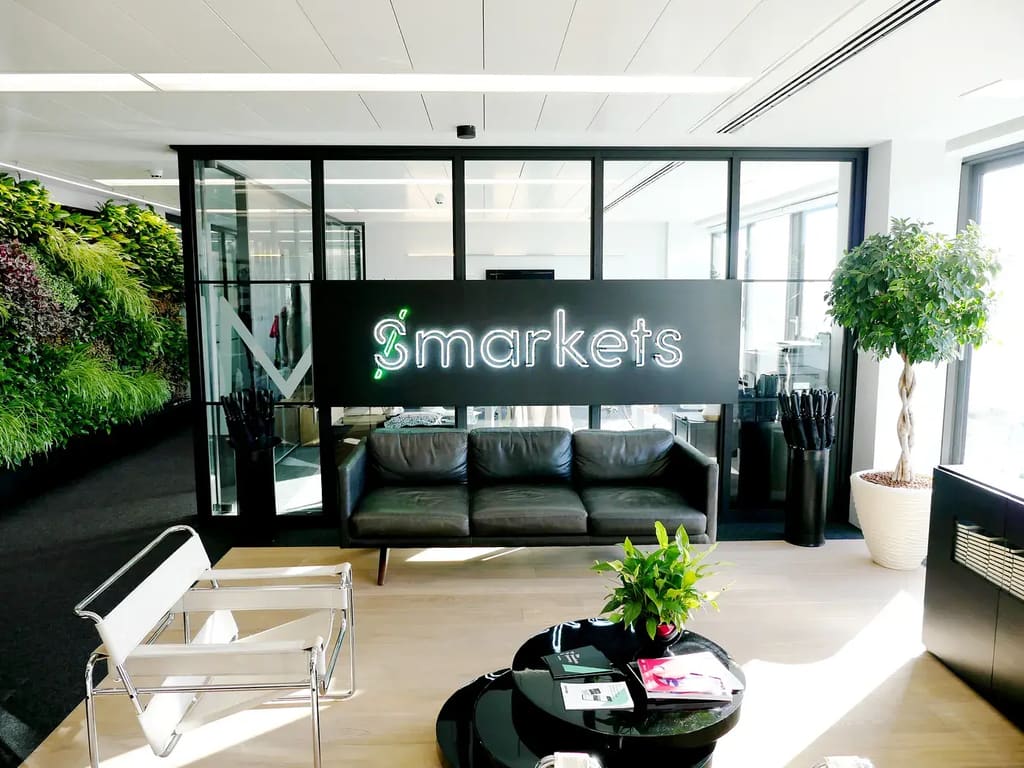
Smarkets, the London-based betting exchange, is charting an unusual course into the United States, pursuing a federal license for prediction markets while simultaneously applying for state sportsbook permits.
Founded in 2008, Smarkets has processed more than $60 billion in lifetime trading volume. In March, the company filed for a license with the Commodity Futures Trading Commission. According to founder Jason Trost, it also has pending applications to operate as a sportsbook in Illinois, Iowa and Michigan.
“The reason we’re doing the dual track is because the legal situation is unclear if the CFTC has federal preemption or not,” Trost said. He added that sports betting drives volume on Smarkets, just as it does on rival prediction market platforms Kalshi and Polymarket.
The company’s expansion comes amid a tug of war between federal and state regulators. A growing number of states argue prediction markets are operating as illegal gambling platforms. The CFTC, however, has sued multiple states to block efforts to regulate the platforms. Last month, attorneys general from 44 states wrote that the federal agency cannot be the exclusive regulator of sports-related event contracts found on exchanges.
When New York filed a lawsuit against prediction market platform Kalshi in July, Kalshi dismissed it as “political theater.” The company said, “States can’t just shut down a federally licensed exchange. This would also just hurt New Yorkers, who would be driven offshore.”
While that regulatory conflict continues, Smarkets is trying to cooperate with state authorities. The Susquehanna-backed platform has applied as a sportsbook in Illinois and Michigan, two states where regulators have categorized prediction markets as unlicensed sports betting operators. Smarkets already operates as a sportsbook in Indiana.
Trost said the company’s first choice would be to run as a prediction markets exchange regulated under the CFTC. He agrees with the argument some states have made that sports event contracts should be identified as swaps and federally regulated. “We view it more as a hedge rather than we want to be active on a state level. You know, our preference is to be active on the federal level,” he said.
Smarkets is not the first to take this dual approach. Sports betting platforms DraftKings and FanDuel launched their own prediction markets late last year. During an earnings call last week, FanDuel’s parent company, Flutter, noted that its prediction market platform can gain customers faster in states where sportsbooks are still under scrutiny.
For Smarkets, operating as a sportsbook means confronting each state’s requirements, including high compliance and tax costs. Trost said he is willing to accept that burden to make Smarkets a leading “good actor” in the business. He pointed to the platform’s experience in four European countries, including Ireland, Malta and Sweden, which he said has taught the company how to respond to contrasting regulatory landscapes.
Without naming specific operators, Trost said platforms in the space have a responsibility to follow regulation rather than work around it. “Some of my competitors are in danger of ruining the reputation of this industry because I think they’re acting irresponsibly [and] not following regulation closely enough,” he said.
Smarkets continues to operate in Indiana while its applications in Illinois, Iowa and Michigan await decisions. The company’s long term positioning remains uncertain as the legal dispute between state regulators and the CFTC plays out.